
How golf courses and sports fields use both tools
When it comes to turfgrass fertility, the debate between foliar and granular applications isn’t necessarily about which method is better. Both have a place in a successful fertility program, but how they’re used can look very different depending on whether you’re managing a golf course or a sports field.
While both rely on sound agronomic principles, the goals, maintenance schedules, acreage and demands placed on the turf often influence how each operation approaches fertility. Understanding those differences can help turf managers make better decisions about which tool to use, when to apply it, and how to get the most out of their program.
Response time vs. longevity
 Foliar and granular fertility serve different purposes, and understanding those differences is key to using them effectively.
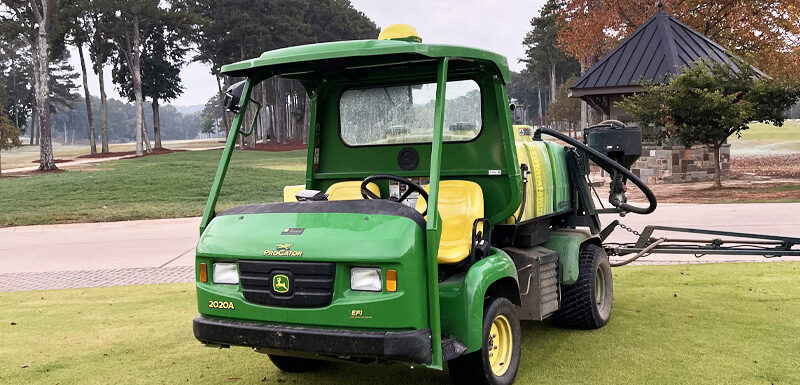
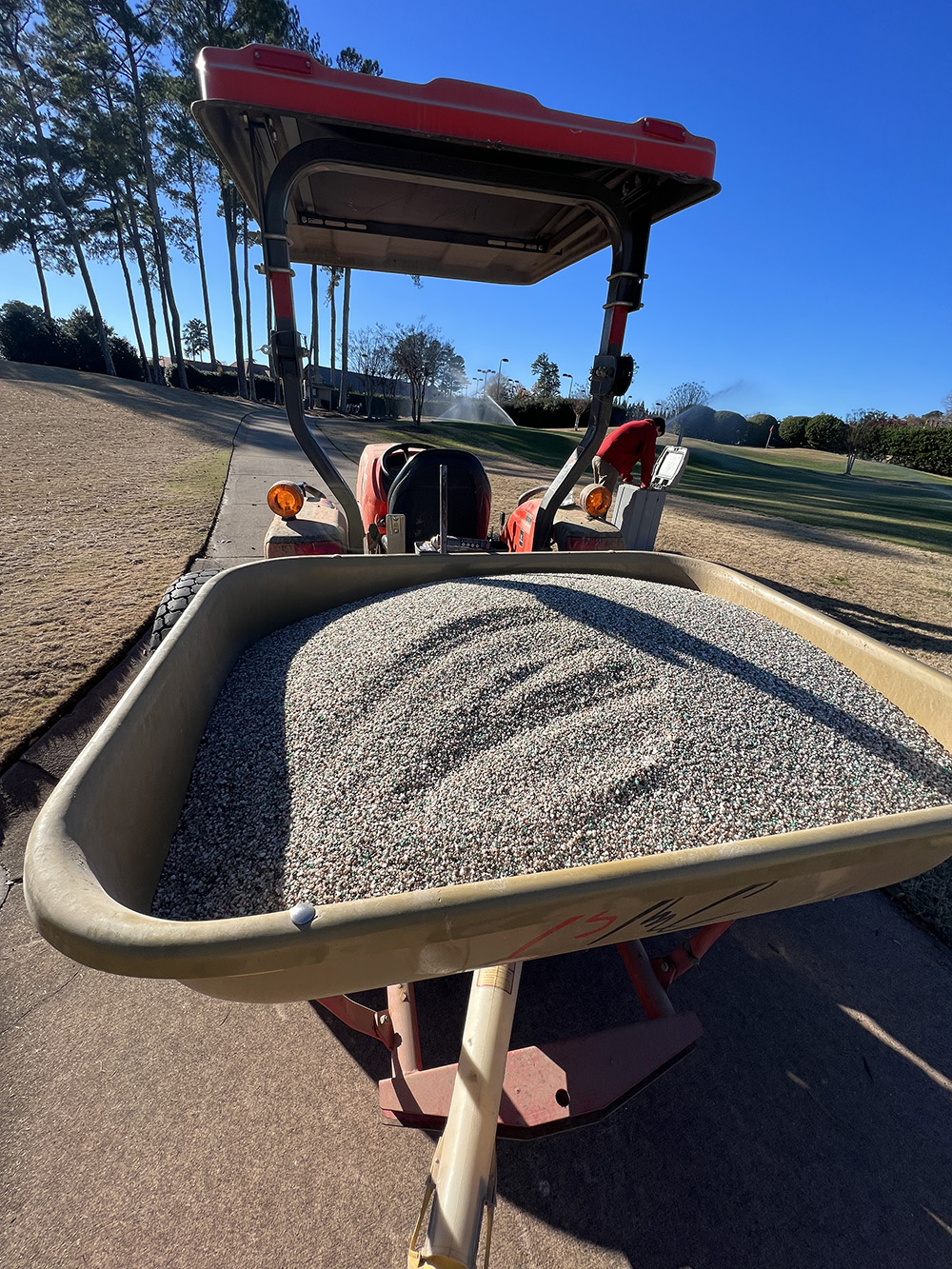
Foliar applications allow nutrients to be applied directly to the leaf surface. Depending on the nutrient, formulation, and environmental conditions, they can provide a relatively quick response and allow managers to spoon-feed nutrients in smaller, more frequent applications. Granular fertilizers, on the other hand, can provide nutrition through the soil and, depending on the product, deliver nutrients over a longer period.
On a golf course, particularly on putting greens, foliar fertility is often used to make precise adjustments to growth, color, and plant health without relying exclusively on larger granular applications. Frequent, lower-rate applications can help superintendents manage growth while maintaining consistent playing conditions. Granular products still play an important role, especially when soil-applied nutrition is needed or when treating larger areas efficiently.
Sports turf managers might approach the balance differently. With larger fields, multiple facilities and limited maintenance windows, granular fertilizer can be an efficient way to deliver nutrients across broad areas. Foliar applications can supplement that foundation when a more targeted response is needed, when conditions allow, or when managers want to fine-tune growth and color.
Neither approach is exclusive to golf or sports turf. The difference often comes down to the specific playing surface, the desired response, available equipment, labor, and how frequently the turf can be treated.
Agronomy meets operations
One of the biggest differences between golf course maintenance and sports turf management is how the playing surface is used and how much time is available to maintain it.
Golf courses typically manage several distinct turf areas, each with different performance expectations. Putting greens demand exceptional consistency, while tees, fairways, and roughs have different fertility requirements based on turf species, mowing height, traffic, and desired playing conditions. A superintendent may use a more intensive, precise fertility program on greens while relying on different products, rates, and application schedules across the rest of the property.
Sports turf managers often face a different challenge: maintaining durable, safe and playable surfaces while working around practices, games, tournaments, and other scheduled events. A field may need to support repeated use with only a narrow window for maintenance. Applying granular fertilizer across a large area may be practical, but managers must consider how the product will be watered in, how soon the field will be used again, and whether the application could affect playability.
Foliar applications can offer flexibility in either setting, but they still require proper timing, suitable weather, and consideration of when the surface will be used. A golf course may have opportunities to apply products during a routine maintenance window, while a sports field manager may need to coordinate applications around a game schedule or a series of practices.
In both environments, the best fertility program is one that fits the agronomic needs of the turf and the operational realities of the facility.
Timing and environmental conditions matter
Regardless of the surface, fertility decisions should be based on more than a calendar.
Temperature, soil moisture, plant growth, nutrient availability, rainfall, irrigation and the formulation being applied all influence how a product performs.
On golf courses, especially putting greens, managers may use frequent foliar applications to make incremental adjustments throughout the growing season. Those applications must be balanced against growth expectations, mowing frequency, clipping yield, and desired playing conditions. Granular applications require similar consideration, particularly when managers need to account for nutrient release, irrigation and the potential effects on growth and surface consistency.
For sports turf, timing is often closely tied to the field’s use schedule and recovery needs.
Applying fertilizer to encourage recovery after heavy traffic may be beneficial when the turf is actively growing and environmental conditions support a response. However, fertility alone cannot overcome limited recovery time, severe compaction, poor rooting or unfavorable growing conditions.
A granular application may be well suited to a planned maintenance window, while a foliar application may be useful when the manager needs to make a more targeted adjustment. In either case, the application must be matched to the plant’s needs and the time available before the field returns to use.
The goal isn’t simply to apply nutrients. It’s to apply the right nutrients at the right rate and time, under conditions that allow the turf to use them effectively.
Choosing the right tool for your program
The most effective fertility programs aren’t built around choosing one application method and using it everywhere. They’re built around understanding what each tool does well and where it fits within the overall management plan.
For golf course superintendents, that may mean using foliar fertility to fine-tune growth and color on putting greens while using granular products where they make sense across tees, fairways, and other areas. The approach can vary considerably across the property, depending on the turf and the playing conditions being targeted.
For sports turf managers, it might mean using granular fertility as an efficient foundation across larger fields, then incorporating foliar applications when they support a specific agronomic objective. Field availability, traffic, irrigation capabilities, labor and equipment all help determine what is practical.
In both cases, product selection should be driven by soil and tissue testing when appropriate, turf response, nutrient requirements, environmental conditions and the intended outcome, not simply by whether a product is foliar or granular.
Ultimately, golf course maintenance and sports turf management have different operational demands, but the agronomic objective remains the same: grow healthy turf that performs as expected. Foliar and granular fertility are not competing approaches. They are complementary tools.
The real question isn’t whether foliar or granular fertility is better. It’s which tool best fits the turf, the objective, and the conditions you’re managing.

