
I got into technology because I needed a way to stop damaging greens while chasing performance.
It wasn’t because I was a technology guy. In fact, about 14 years ago, I took on a grass I really didn’t want: seashore paspalum. At the time, I wasn’t convinced it could make a truly good putting surface.
Then we started pushing it. We discovered we could mow paspalum extremely low and produce a very good golf green. The problem was that some days we could mow at those heights and everything looked great. Other days, at seemingly the same height of cut, we would scalp it.
Why? That question probably did more to pull me into turf technology than anything else.
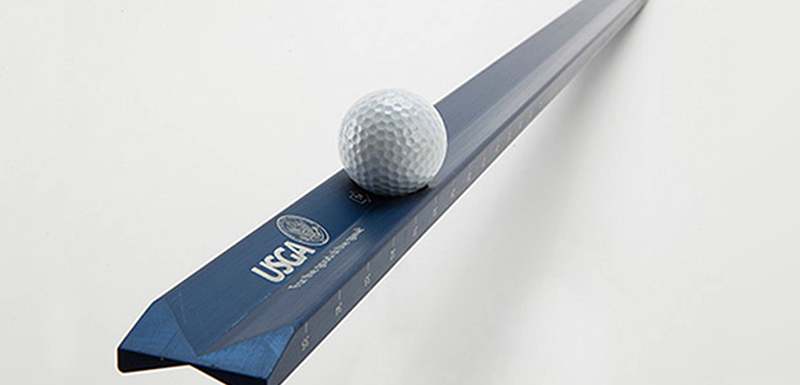
We started measuring moisture. We used the POGO. We looked at firmness with the TruFirm. And, God forbid, I even started using the Stimpmeter and paying attention to green speed.
But one of the most important measurements I used — and still use — is about as low-tech as it gets: the clipping bucket.
How much grass did we actually remove today?
Clipping yield told me something none of those electronic instruments could tell me by themselves. It told me what the plant was doing.
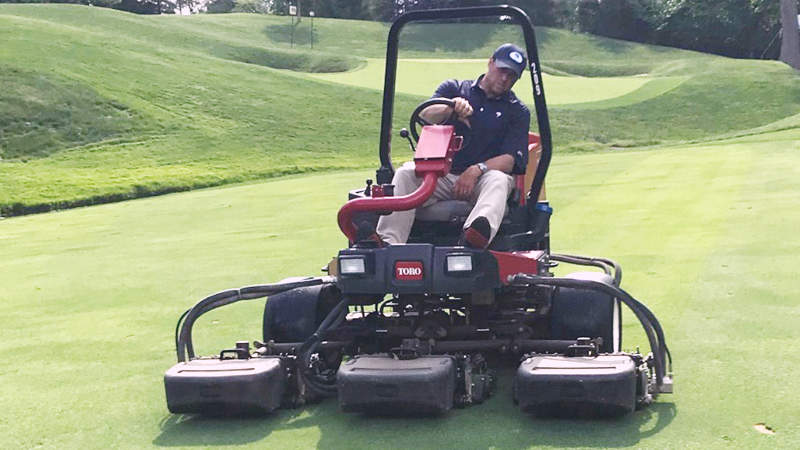
Moisture, firmness, clipping yield and ball roll began to create a picture. Instead of simply knowing what a green did that morning, we could start understanding why it did it — and why trying to reproduce yesterday’s performance could sometimes injure the turf today.
But for years, we took all that information and collapsed it into one number: speed, except the Stimpmeter doesn’t measure speed.
It measures distance.
There’s an irony in that. The ball is slowing down from the moment it leaves the Stimpmeter, yet the farther it continues to roll before stopping, the larger the number we celebrate as speed.
So, really, we took a measurement of farness and turned it into the headline metric for putting-green performance.
And I was guilty of it, too.
The number was useful. It gave us a common language. But it was never the whole story.
A green can produce an impressive Stimpmeter reading and still not be a great putting surface. What I really wanted to understand was why the ball behaved the way it did—and what the plant had to endure to produce that behavior.
That’s why I think the movement toward smooth, true and firm is important.
(T)he Stimpmeter doesn’t measure speed. … It measures distance. … There’s an irony in that. The ball is slowing down from the moment it leaves the Stimpmeter, yet the farther it continues to roll before stopping, the larger the number we celebrate as speed.
A golfer doesn’t experience a number. A golfer experiences a surface.
The challenge has been making those measurements practical enough that people will use them. If understanding a putting surface means carrying multiple instruments, setting up tethered equipment and taking a series of separate readings, there is going to be resistance. Golf course maintenance departments don’t exactly suffer from an excess of time.
That’s what caught my attention about the Q-ball technology.
Instead of another stationary or tethered instrument, you have what is essentially a self-propelled ball traveling across the putting surface and gathering information as it goes. It can help us look beyond a single number and start understanding smoothness, trueness, firmness, slope and even the characteristics of potential hole locations.
In some ways, it feels like a natural progression of what is happening everywhere else in our business.
We now have autonomous machines mowing turf, raking bunkers and picking balls on driving ranges. Why wouldn’t autonomy eventually find its way into how we measure the playing surface itself?
The interesting part isn’t that the ball moves by itself.
The interesting part is what happens when better information becomes easier to collect.
That matters because technology should reduce the friction between asking a question and getting an answer. It shouldn’t make the superintendent’s job more complicated. And it certainly shouldn’t replace the superintendent.
One size will never fit every golf course. No instrument replaces experience, observation or feel. Technology simply gives us another set of eyes—and hopefully better information for making decisions.
That brings me back to where I started with paspalum.
I wasn’t trying to become more technical. I was trying to figure out why I could mow a green one day and get a great result, then do seemingly the same thing the next day and injure the turf. I wanted to give the golfer the best possible playing conditions while keeping the plant healthy enough to do it again tomorrow.
Fourteen years later, that’s still the objective.
And maybe we occasionally lose sight of something even simpler. Golfers just want to make putts.
They may brag in the clubhouse about how fast their greens are, but standing over a six-footer, nobody is thinking about the Stimpmeter reading. They want the ball to start on line, roll smoothly and go in the hole.
That’s performance.
So use the technology. Measure moisture. Measure firmness. Measure clipping yield. Measure smoothness and trueness. And yes, roll the Stimpmeter if the information helps you make a better decision.
Just don’t confuse a bigger number with a better green.
Grow healthy, great-performing grass. Make putts, not numbers. And if you’re still worried about how fast the greens are, maybe go take a lesson.

