
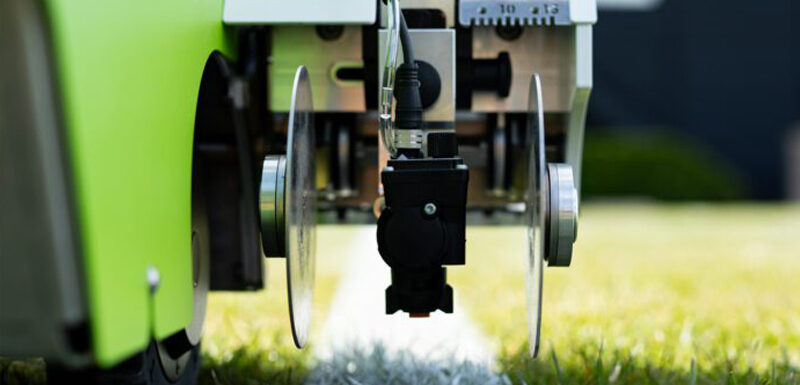
The fundamentals of turf management have not changed. We still mow, fertilize, manage pests, irrigate and spend countless hours observing how the plant responds. What has changed is the amount of information and technology available to help us make those decisions.
Technology is not replacing the experience of a turf manager — it is enhancing it.
From guesswork to data-driven decisions
Soil probes, including TDR meters, have been part of turf management for years. Today, however, in-ground soil-moisture sensors and technologies such as Turfrad are allowing turf managers to become even more precise with how and when we irrigate.
 That precision matters. Better moisture data can help reduce unnecessary water use while lowering the risk of overwatering. Modern irrigation systems have also made it possible to monitor and control irrigation from a phone or tablet, allowing managers to make adjustments quickly without having to physically be at the irrigation controller.
This technology has become especially valuable on golf courses, where managing moisture across large areas is critical, but it is increasingly finding its way into the sports turf industry as well.
Automation: Replacing labor or improving it?
Automation and robotics are quickly becoming a larger part of the turf industry.
Autonomous mowers, GPS-guided sprayers and automated irrigation systems are becoming more common on golf courses and sports fields.
When people hear “robotics,” the immediate thought can be that technology is replacing people. In reality, its greatest value might be in giving turf managers and their crews more time to focus on the work that technology can’t replace.
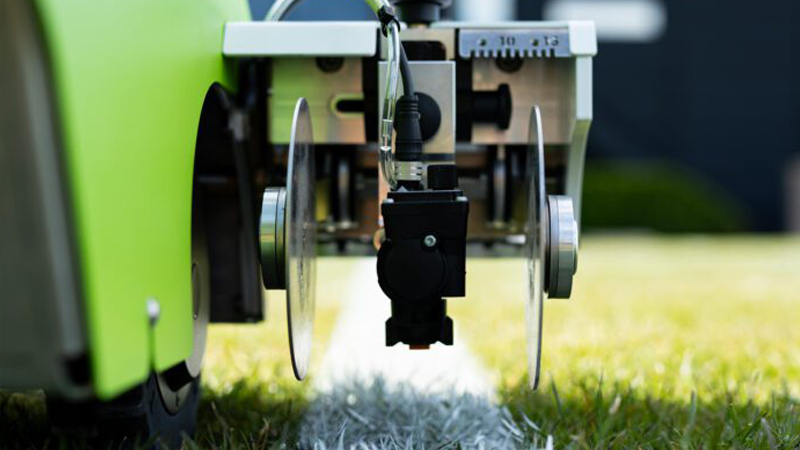
Autonomous mowing can take care of repetitive tasks while crews focus on detail work and other maintenance priorities. GPS-guided spraying allows turf managers to make more precise applications, reduce unnecessary overlap and overspray, and better track exactly how much product is being applied.
On golf courses, autonomous mowers can maintain large areas such as fairways and roughs, while allowing labor to be redirected toward other areas of the property. In sports turf, that same technology can help managers maintain fields more efficiently while keeping their attention on safety, playability and recovery.
Technology meets the reality of sports turf
Sports turf presents a unique challenge: The turf does not get to decide when the game is played.
A turf manager can have the perfect irrigation plan, the ideal fertility program, and a field that is recovering exactly as planned—but a game, practice or tournament is still going to happen because it is on the schedule.
That is where technology can make a significant difference.
Smart irrigation systems, soil-moisture sensors, weather stations and field-monitoring technology can provide managers with better information about field conditions and recovery. Weather data can also help managers plan irrigation, fertility, mowing, and field preparation around upcoming conditions and scheduled events.
Even something as simple as mowing can become a scheduling challenge during major events. Autonomous mowing technology provides the ability to maintain turf overnight when daytime mowing isn’t practical, allowing managers to maintain their standards without interfering with field operations.
The turf manager of tomorrow
The future of turf management will not be about choosing between technology and experience. It will be about combining the two.
The best technology in the world still needs someone who understands the plant, recognizes what the turf is telling them, and knows when the data doesn’t tell the whole story.
Technology gives us more information. Experience gives us the ability to use it.
As technology continues to evolve, the turf manager’s role will evolve with it. The question isn’t whether technology will change the way we manage turf—it already has.
The question is: How much will it change over the next 10 years?

