
I proudly call myself a treehugger. I believe that trees play an important role in the landscape from creating beauty, increasing property values, and providing multiple ecosystems functional benefits. Specifically in the golf realm, smart tree placement can be used to positively influence play.
In all my jobs, tree planting was seen as a primary effort for the grounds crew. We’d evaluate species diversity and crown coverage, to planting density, all to create an “urban forest”. But, over the years, I have slowly begun to moderate my view of trees as the primary means and metric for creating an effective and sustainable landscape. In this blog I will briefly explain why I now feel inclined to say trees are an answer and must instead be part of a balanced grounds management approach.
Tree maintenance is expensive
One of the primary attributes of trees is the potential longevity they can exhibit. Naturally, trees can easily last decades and in some cases may surpass the century mark. Tree longevity is a frequent selling point for pursuing a robust tree population. In the urban forest, trees usually will not last as long but can frequently attain 30, 40 or 50 years. If trees are to last in the urban setting, they must be managed properly.
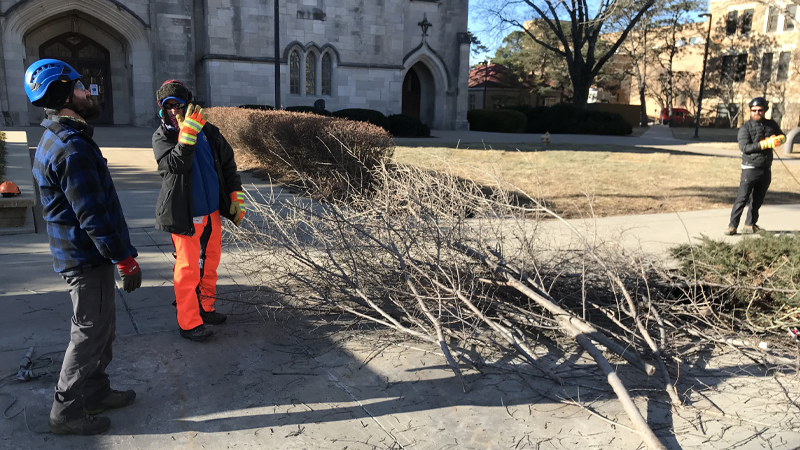
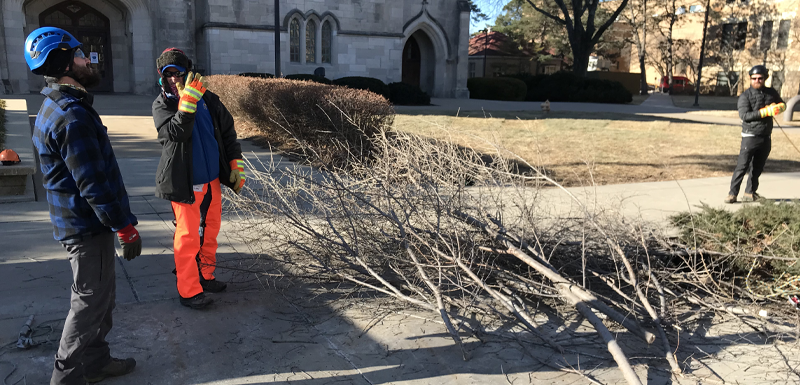
Management costs can include propagation, nursery cultivation, installation, pruning at regular intervals and inevitably removal costs. Then the cycle starts again.
Running an inhouse tree crew has significant equipment and manpower costs that might make contract resources more appropriate. Here again costs can be high given the aforementioned considerations, not to mention profit.
All of these costs are assumed by the customer (you) and must be considered in your tree management decisions.
Trees squeeze out other approaches
Our teams are stretched very thinly in time, money and staff. Every endeavor a team undertakes, no matter how well intentioned or managed, is an opportunity cost. Grounds management is complex, ordained by horticultural fact, and can have a seasonal/environmental based time limit to it.
Tree planting occupies resources that could be utilized elsewhere to balance a diverse landscape. Cultivation of trees does not perfectly mesh with cultivation of other plants. TurfNet readers are surely familiar with the management conflict of turf and trees. You can grow them both harmoniously, but it will change management options. This is also true for the tree relationship with any other plants.
Trees are big
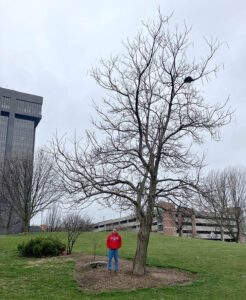
Many landscapes pursue the classic tree canopy towering over the site. Mature trees lining streets and covering parkland have long been the goal of landscape designers and managers. But, as trees grow, the potential for conflict with infrastructure and other landscape components increases.
It is too common for trees to be planted close to buildings and roads or in parking lots in an attempt to save energy or provide cooling over pavement. If a conflict arises, trees likely will be subordinated to the needs of infrastructure.
Tree size and location should be determined by performative needs, the size of the planting area, and proximity to priority infrastructure. Trees canopies can impact roofs and gutters and roots can infiltrate underground pipes or cause heaving sidewalks. Lastly, the bigger the tree, the more expensive it is when removal becomes necessary.
Trees can dominate the landscape
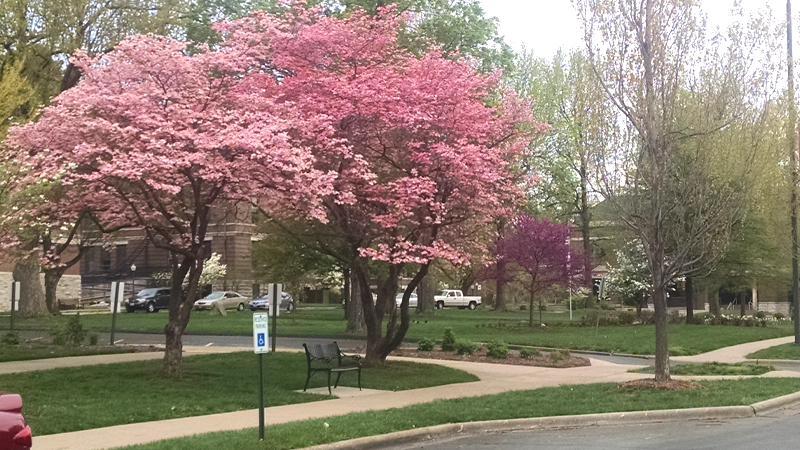
Trees are an important and useful landscaping component. When used properly they can add beauty, financial value and ecosystem services to our landscapes. But problems can arise when the use of trees is not balanced against other aspects of the landscape.
Many landscapes focus on increasing canopy cover or mandate 2-for-1 tree replacement. This focus on trees as the primary metric of landscape health can lead to one-dimensional campuses. The healthiest landscapes are multifaceted, consisting of a wide variety of plants and other features. Landscape complexity adds stability and interest to a site. Too heavy an investment in trees may create the perception that an organization is adequately investing in its landscape when it isn’t. Trees are an obvious and readily supported component of the landscape, but should not be the only focus.
Integrated grounds management
Balance is important in the landscape. Focusing on any one solution can leave a team exposed and can lead to underperforming landscapes.
Trees are a long-term grounds component and must be managed as such. The arc of tree life requires organizational support from far more than just the grounds team.
Issues arising from poor management may only be felt once these consequences are too big to ignore and require massive resources to mitigate, if they can be mitigated at all. This is why integrated grounds management is so important. By including expert tree advice from arboricultural experts, your tree population can fulfill its unique and hugely beneficial role. However, your trees are not going to solve all landscape issues and may actually exacerbate them.
The use of sound tree planning, culture, and management can ensure your trees are an answer, not a problem.

