
It is improbable that many, if any, golf course superintendents had the conflict in the Persian Gulf region on their Bingo card as potential influences on budgets and bottom lines in 2026.
Almost half of the world’s supply of urea fertilizer is produced in the Middle East and passes through the Strait of Hormuz to buyers around the world. Many urea producers have ceased production since Iran closed the Strait for the first time in March after joint U.S.-Israeli airstrikes on Feb. 28.
The Qatar Fertiliser (sic) Co. is the world’s largest maker of urea-based fertilizer, supplying 14 percent of the total global supply. That company has been offline since March after the country’s energy infrastructure, including natural gas plants (a critical component in the formulation of urea fertilizer) came under attack by Iran. Other urea plants throughout the world have since ceased operation as well, leading to what could be a global shortage of nitrogen fertilizer.
The double-whammy is the output of urea and natural gas. It doesn’t help that Russia is the world’s largest (natural) gas station.
Iran is the world’s fourth-largest producer of urea, behind Russia, Egypt and Saudi Arabia. Russia also is the world’s leading producer of natural gas.
“Half the world’s treated urea is exported by (Persian) Gulf countries through the Strait of Hormuz,” said Chris Gray, director of marketing and professional products for LebanonTurf. “That is your takeaway message.”
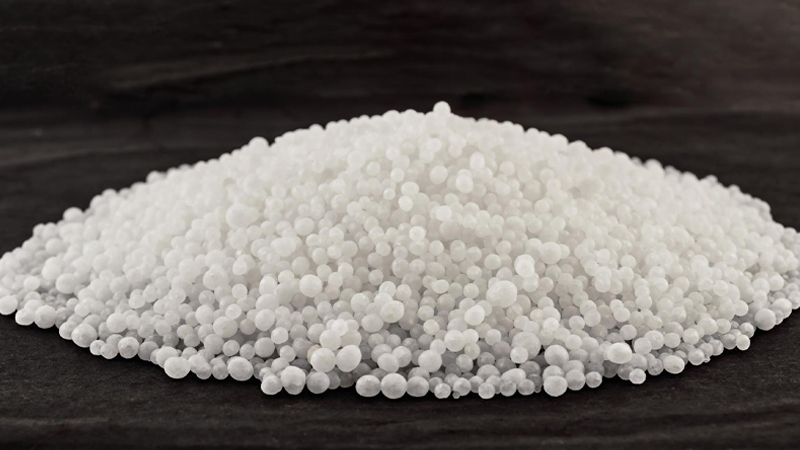
Since the conflict began Feb. 28, the price of urea skyrocketed by as much as 50 percent in March to more than $900 per metric ton, its highest price since 2022, according to Bloomberg. The American Farm Bureau Federation reports that nitrogen fertilizer prices in the U.S. have fallen somewhat in April, but still are up by 20 percent to 40 percent since before the conflict began in February.
Golf course superintendents who still have nitrogen fertilizer on their shopping list can expect to pay more before the conflict is resolved and production resumes.
Superintendent Brian Boyer has a 12-month golf season at Cinnabar Hills Golf Club in San Jose, California. He made his first fertilizer purchase of the year in late February, just days before the conflict began. His next purchases are scheduled for mid- to late June and again in September or October.
“I just updated the ownership yesterday and told them to expect a 40 percent increase,” he said. “They appreciated the update. They know what is happening, so they understand.”
What about those facilities that don’t have room in the budget for such a price increase?
“Other clubs that don’t have the money, I don’t know what their options are,” Boyer said.
I just updated the ownership yesterday and told them to expect a 40 percent increase.
Urea is manufactured through a procedure known as the Bosch-Meiser Process. Patented in 1922 by German chemists Carl Bosch and Wilhelm Meiser, the Bosch-Meiser Process uses ammonia and carbon dioxide derived from natural gas to produce water-soluble prills in varying sizes. Natural gas has been in short supply in the region because of the Russia-Ukraine war that began in 2014 and ramped up into full-scale warfare in 2022.
The shortage of natural gas coupled with events in the Gulf region have prompted shutdowns at other urea processing plants throughout the world. Five of six plants in Bangladesh and multiple facilities in India have closed since the U.S.-Israeli conflict with Iran.
The two sides agreed to a ceasefire April 7, at which time the strait was supposed to reopen to cargo traffic. Despite reports of limited reopenings, the strait remains mostly closed, and Iran has reinforced restrictions on the strait, including seizing ships, in response to a U.S. Navy blockade of Iranian ports. Whenever the Strait reopens and fertilizer plants in the region are back online, it will be at least a month before ships in the region reach U.S. ports.
“The double-whammy is the output of urea and natural gas,” said Gray. “It doesn’t help that Russia is the world’s largest (natural) gas station.”

