
Election Day might be in the rearview mirror, but legal wrangling in the nation’s capital surrounding — of all things — the proposed restoration of a public golf course is far from over.
The National Park Service, on behalf of the U.S. Department of the Interior, submitted its official proposal Tuesday to the National Capital Planning Commission for the renovation of East Potomac Golf Links in Washington, D.C. President Donald Trump first publicly announced in June his intent to renovate the 1921 Walter Travis design on the city’s Hains Point peninsula. According to the 56-page proposal, the project is to include an 18-hole layout by Fazio Design and replacing 20,700 feet of deteriorating seawall to protect the peninsula that lies between the Potomac River and the Washington Channel. The NCPC provides overall planning guidance for federal land and buildings in the nation’s capital.
The project includes a liberal tree-removal plan to restore the park to what it looked like when Travis built the course 105 years ago. Hundreds of trees already have been removed, sparking outrage by some and prompting U.S. District Judge Ana Reyes to order a temporary halt to the project on Oct. 28.
The planning commission said it will consider the proposal by the park service at its next meeting in December. NPS, however, has said that the course will close Nov. 15 when the project will resume. This week, the DC Preservation League and two people who play the golf course, filed a motion asking Reyes to extend the temporary stay on the project and to block the closure.
According to the report, the restoration plan calls for thinning trees to make the golf course a more open layout like Travis had intended while also reintroducing views of the water and D.C. monuments from the property. The 56-page proposal also highlighted the need to update the facility, citing rotting infrastructure and dozens of fire and safety concerns in the facility’s aging clubhouse as well as the crumbling seawall.
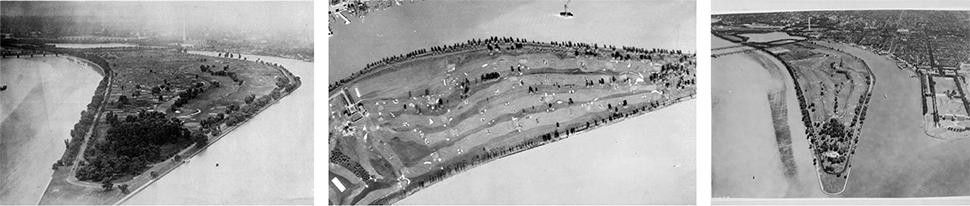
Standing water is a recurrent issue on the golf course, according to the report. Some specifics of the proposal include new irrigation and drainage, raising all greens, tees and fairways above the current level where standing water becomes an issue, and adding features to store surface water. The plan envisions a course “designed to host events such as the U.S. Open, PGA Championship and Ryder Cup, while staying open and affordable for the public.”
East Potomac Golf Links is located within the 329-acre East Potomac Park, a popular recreational spot for Washingtonians on the manmade Hains Point peninsula. Replacing 20,700 feet of seawall, according to the proposal, would mean closing the park for an estimated 2.5 to 3.5 years, and would block access to the park for hikers, bikers, walkers, runners and anglers. The project also would absorb into the golf course the extreme southern tip of the peninsula, which is a popular destination for various recreational activities. The plan suggests converting parts of West Potomac Park to replace lost recreational opportunities.
Manmade Hains Point peninsula was constructed in the 1880s and ’90s by the U.S. Army Corps of Engineers. It was designated for public use in 1897.
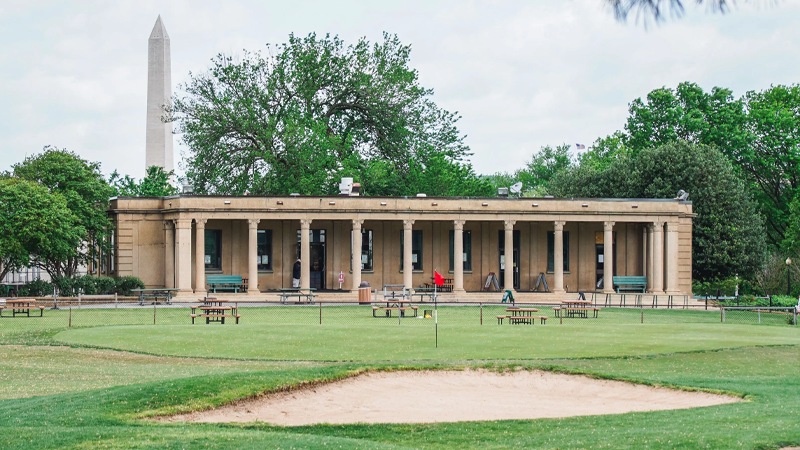
Those who are against the project cite the historic significance of the property as well as its popularity as a recreational destination.
The renovation proposal also calls upon the property’s past, noting how the original Travis design was nearly devoid of trees. It also notes that much work on the property has taken place in the recent past, including a driving range and building constructed in the mid-1990s, a late ’90s practice course and restoration work on the Red Course in 2001-02, all of which proceeded without protest.
Images in the proposal show many areas of the golf course in dire need of repair and multiple areas within the park that are closed due structural failure and flooding.
The NPS plan prices the seawall project at $304.5 million but does not specify the cost to rebuild the golf course. The park service, however, has said that regardless of any pending legal rulings, the park will close Nov. 15 so seawall repairs to protect the peninsula can commence.

