
The University of Tennessee’s turfgrass management faculty built one of the nation’s leading programs by constantly challenging the status quo.
To that end, the faculty in Knoxville is redefining how students, not only at Tennessee but at other turf programs throughout the Southeast, find internships or even their first post-graduate job through what is billed as a “reverse” job fair.
For the past three years, UT turfgrass has hosted a job fair to help connect students with potential employers, who included representatives from some of the biggest names in golf at stations throughout a conference room. Students then could choose which of the dozens of potential employers they wanted to visit.
Faculty members noticed in those first two years that many students either were huddled around the same few tables, or off in a corner talking with each other. That was not the experience UT faculty envisioned for job seekers and those coming to eastern Tennessee seeking interns or assistants.
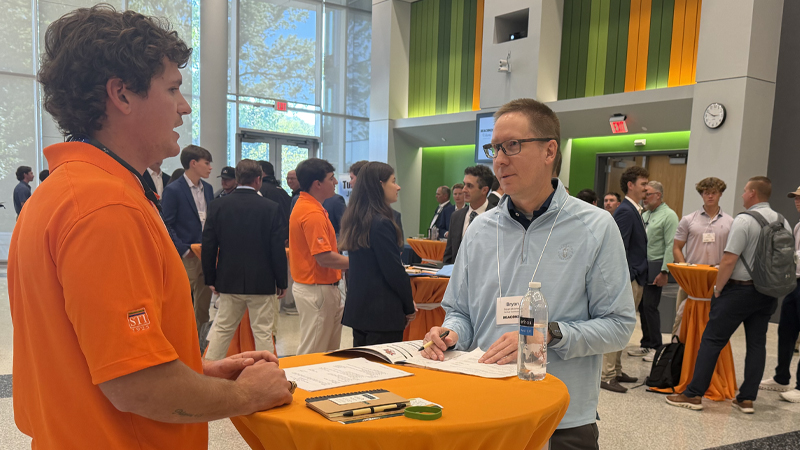
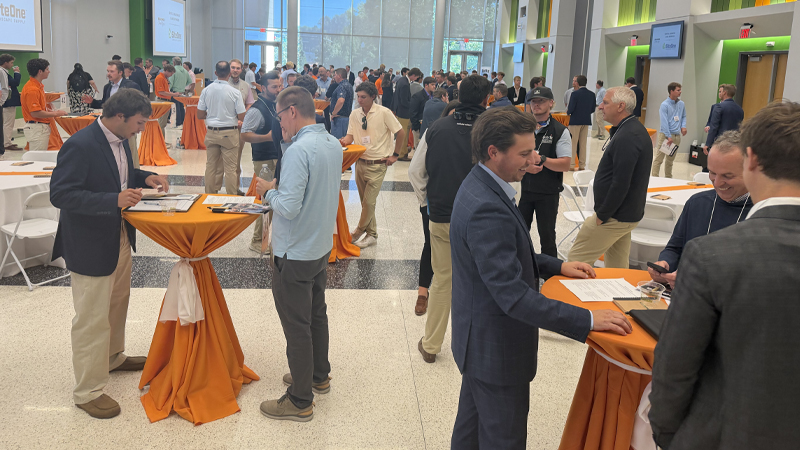
As a result, Tennessee officials flipped the script for this year’s event by assigning students to individual stations where employers could wander the room and engage each student individually.
“One of the things that we noticed was that students like bright, shiny objects,” said UT professor of plant pathology Brandon Horvath, Ph.D. “And so, when you have certain logos in the room that are bright and shiny and maybe high-profile, that’s where everybody went, and so there would be a line at those tables to talk to two people, then there would be nobody at other employers booths that might have a great experience, but they can’t pitch you if you’re not there to talk about it. So, what we talked about was let’s have the students be stationary and let the employers go around the room to each student.”
The reluctance of some students to engage with employers likely is a byproduct of youth.
“They’re maybe not fully comfortable yet going and initiative a conversation,” said Becky Grubbs Bowling, Ph.D., assistant professor and extension specialist at Tennessee. “This puts them more immediately into the hot seat in a beneficial way. They’re tossed into the deep end where they are confronted in a professional interaction, and that takes out that element where they have to initiate the conversation.”
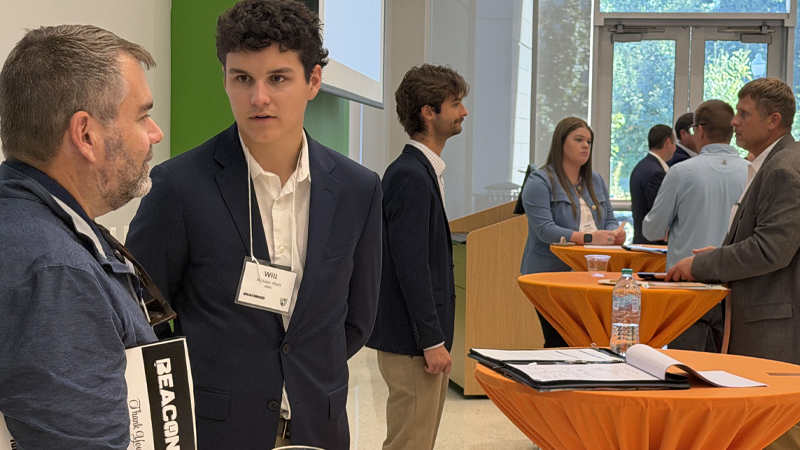
More than 70 students and 40-plus employers were registered for this year’s two-day event held Oct. 13-14 known officially as Beacon 26. The job fair included one-on-one interview sessions as well as educational professional-development seminars.
Besides Tennessee, students came from as far away as the University of Georgia, North Carolina state University, Clemson University, Horry-Georgetown Technical College in Myrtle Beach and Abraham Baldwin Agricultural College in Tifton, Georgia.
Making the trip to Knoxville to make connections with some of golf’s most prestigious clubs was an easy decision for Clemson student Will Mahl, whose father, Jason, works for the city of Savannah, Georgia and was superintendent at Moraine Country Club near Dayton, Ohio.
“I wanted to come to this because of the connections,” Mahl said. “The golf industry is a very tight-knit industry, and it’s something that you need to get into and make connections. It’s not something you sit on the couch and hope a job pops up out of nowhere. If you want to get far in this business, you need to get out and connect with people.”
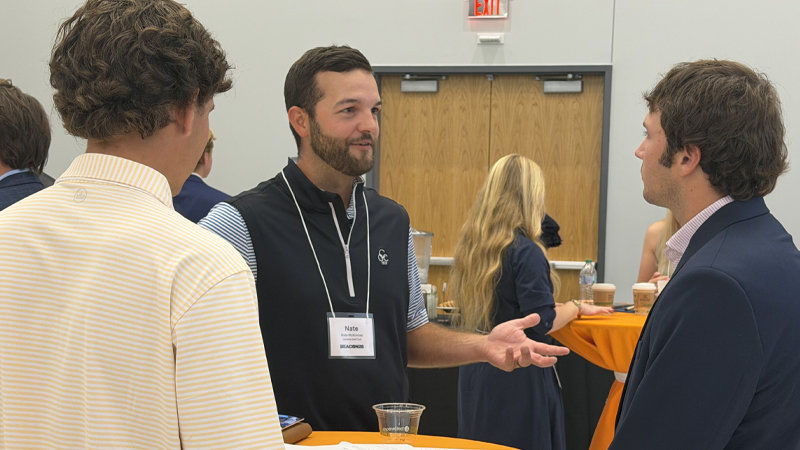
Ethan Ringold and Aiden Mueller of Hazeltine National made the trip from Chaska, Minnesota to Knoxville to seek out candidates for the Robert Trent Jones Sr. classic in metro Minneapolis.
Ringold liked the format that allowed club representatives to meet as many students as possible.
“I like the aspect that we can make sure that we have met every turf student here,” Ringold said. “If we had a booth, we don’t know how many turf students would actually come to us as they’re just walking by. This is the chance where we actually get to meet them, put a name to a face and talk to them about what our internship program is.”
Grace Gable is a master’s student at Clemson, who accompanied undergrads on the trip as a sort of mentor.
“I think it’s a great way to network,” Gable said. “This industry has huge on networking.
“I think this is really good, especially for undergrad students who are not entirely sure where they want to go in the industry yet. They can talk to these experienced professionals and get that background, be able to build those experiences, internships and just see what they actually want to do within the turf industry.”
As the faculty at UT strives to ensure the job fair is relevant into the future, there will be more changes to come in subsequent events.
“We want it to continue to evolve,” Grubbs Bowling said. “We want to include more students from more schools and make this a premier job fair for the entire Southeast. We don’t want it to get stagnant.”

