
Hot humid conditions that have permeated much of the country provide a perfect environment for many common issues on golf course turf.
Pythium blight, anthracnose and brown patch are just a few of the diseases linked to hot, moist summer conditions. Algae is another issue affecting putting green turf that is associated with hot, humid conditions.
ZymeCo, the maker of ThatchZyme, recently released early results from research trials for its AlgaeZyme product that uses extracts from fermented barley straw in combination with fungicides to control algae on managed turf.
Algae contain chlorophyll and grow by producing chains of thread-like cells that can restrict air and water movement, thus influencing gas exchange and drainage, according to researchers at NC State and Penn State. Symptoms manifest as a fuzzy mat either on the surface or in the thatch layer that can form a dry, hydrophobic crust that slows or prevents recovery.
A variety of traditional control methods include chemical options and cultural practices.
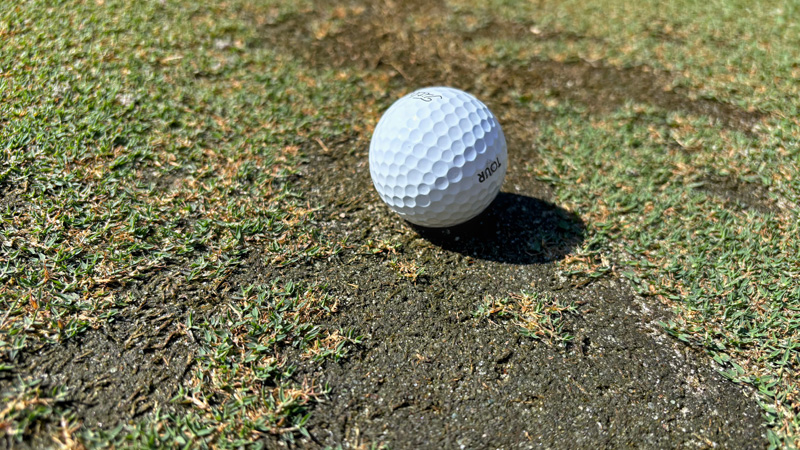
Two years ago, in 2024, scientists at ZymeCo began working with fermented barley straw extract as a control option for blue-green algae. Much of the inspiration came from algae control in ponds.
“As an enzyme discovery company we started working on ways of degrading the matrix which the algal organism uses to create protective layers that become crusts once they dry,” Phil Dwyer, ZymeCo’s vice president of sales and marketing, said via email. “The moisture-loving algae needs these crusts to form in order to survive dry periods. Barley straw was used as a growth substrate during the bio-fermentation process as we had a hunch the breakdown components from barley straw would be helpful in degrading these algal crusts, similar to how barley straw bales are used to prevent algal growth in ponds.”
In trials at the University of Tennessee, plots were maintained under putting green conditions, including mowing four to five times per week at 0.125 inches with clippings collected and fertilizer applied at 0.25 pounds per 1,000 square feet. All plots also received rotational fungicide applications to guard against resistance and control summer diseases typical for the area.
AlgaeZyme was applied at rates of 0.8 ounces and 1.6 ounces per 1,000 square feet on five dates from June 11 to Aug. 6 and observed for algae decline and changes in visual turf quality.
The 1.6-ounce treatment showed algae decline at a rate that was 74.9 percent faster than the untreated control, while plots treated at the 0.8-ounce rate decline occurred 20.4 percent faster than on the control plots.
Initial knockdown in the first 13-day application interval was, compared with the control plot, 3.6 times faster at the 1.6-ounce rate and 2.6 times faster at the 0.8-ounce rate.
Trials continue this year at multiple locations.
“Our research work is ongoing in 2026 at Tennessee and Rutgers,” Dwyer wrote, “where we are comparing rate and timing effects of AlgaeZyme paired with control products like Chlorothalonil and Mancozeb.”

